
The conflict may disrupt Budget 2026-2027 projections, squeezing revenues and raising subsidies, prompting fiscal adjustments and potential reforms, echoing lessons from the Covid-era shock, points out A K Bhattacharya.

Haryana Chief Minister Nayab Singh Saini has accused the opposition of misleading farmers regarding crop procurement, assuring that all produce will be purchased and that the government is addressing any difficulties in grain markets.

'Workers are the people who create all the wealth in this country. How can you call them anti-national?'

The Maharashtra government has announced a flexible work time initiative for women state government employees working in the Brihanmumbai Municipal Corporation (BMC). The 'Come Early, Go Early' initiative will allow women employees flexible reporting times and earlier departure times.

'The government is putting insurance in the same category as food, which is essential for life.' 'Now this is an opportunity for the sector to focus on the consumer.'

Three laws passed in Parliament could boost central revenues, reshape GST cess flows, shift MGNREGA costs to states and create new budget headroom ahead of the 2026-2027 Union Budget, points out A K Bhattacharya.

Karnataka Chief Minister announces a ban on social media for children under 16 and increased measures to prevent drug abuse in schools, colleges, and universities, alongside investments in education infrastructure and mental health support.

Karnataka and Andhra Pradesh announce ban social media for teens, sparking debate about its effectiveness, impact on education, and implications for advertisers targeting young audiences.

The idea of back-loading the target of fiscal consolidation is perhaps guided by the government's desire to be prepared for any adverse developments in the coming year, points out A K Bhattacharya.
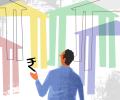
State debt is rising because revenues are disappointingly weak. Ten states have debt ratios exceeding 30 per cent. In 2023-2024, states were borrowing simply to meet day-to-day expenses, points out Debashis Basu.
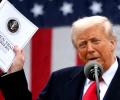
United States President Donald Trump has backed a sanctions bill that could impose 500 per cent tariffs on countries buying Russian oil, giving the White House leverage against countries like China and India to stop them from purchasing cheap oil from Moscow.

The Indian government has introduced a bill to overhaul the civil nuclear sector, allowing private participation and establishing a new liability regime. The SHANTI Bill, 2025, aims to repeal existing acts and address industry concerns.

'Given that the population is almost evenly split, the Indian economy cannot grow without women participating in the workforce.' 'While women's participation has increased, it is still well below 40 per cent,' says Kartik Narayan, CEO of the professional networking and jobs platform, Apna.

A 500 per cent tariff would effectively shut out India's goods and services exports to the US.

The power sector presents a puzzle. A fast-growing economy should be aligned to higher power demand but that hasn't been the case in the financial year 2026 till date (FY26TD).

The International Monetary Fund, in its report on the Indian economy, said the Insolvency and Bankruptcy Code (IBC) Amendment Bill addresses many deficiencies but it has not provided for the participation of operational creditors or rules for executory contracts. The IMF staff report said that the business dynamism in India remains relatively low, marked by low rates of entry and exit, and a high share of inactive or inefficient firms reflecting structural rigidities and high compliance levels.

The exemption of individual life and health insurance premiums from the Goods and Services Tax (GST) enables the insurance industry to make products affordable and attractive, said Ajay Seth, chairman of Insurance Regulatory and Development Authority of India (Irdai) at the Business Standard BFSI Insight Summit 2025.

Force Motors, known for its shared mobility solutions, is gearing up to expand its presence in global markets and defence segment having consolidated its position in India by narrowing down on focus areas for profitable growth, according to managing director Prasan Firodia.
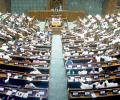
Parliament's approval of the Waqf (Amendment) Bill, a contentious piece of legislation aimed at reforming Waqf bodies, has sparked strong reactions from the opposition, who allege that the bill was "bulldozed" through Parliament. The bill, considered the government's most consequential legislation in its third term, was passed with comfortable majorities in both the Lok Sabha and Rajya Sabha despite opposition claims of a lack of consultation and an intrusion into religious affairs. Other notable bills approved during the session included the Finance Bill, Appropriation Bill, Immigration and Foreigners Bill, and Tribhuvan Sahkari University Bill. The session, which saw high productivity, also witnessed debates on issues such as economic distress, delimitation, and the three-language policy. While the government touted its achievements, the opposition criticized the government's approach and vowed to challenge the Waqf bill in court.

'Previously, contributing only 25 per cent of material costs, states now face burdens of 40 per cent to 100 per cent of total costs, ensuring poorer states will curb project approvals, directly stifling work demand.'
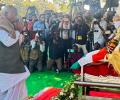
The last rites of veteran Congress leader and former Union minister Shivraj Patil were performed with full state honours in his home district, Latur, in Maharashtra on Saturday, with many top leaders in attendance.
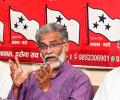
'When the BJP wanted the election to focus on 'ghuspathiya' and promises that look like pies in the sky, we forced them to talk about jobs, giving free 125 units of power, and addressing women's indebtedness.'

The breakfast meet was convened by the CM at the behest of the Congress high command to end the logjam over the issue bothering the 2.5 year old Congress government, with the opposition Bharatiya Janata Party warning of moving a no confidence motion should the power tussle between the CM and his deputy continue.

A new report indicates that increasing unconditional cash transfer schemes for women across 12 Indian states are impacting their fiscal health, with six states projecting revenue deficits.

'A work guarantee that can be switched off at will is no guarantee at all.'

The debate over working hours flared up after Infosys Co-founder N R Narayana Murthy called for 14-hour workdays.

Learning from East Asia, India must reform its district administration with performance, accountability, and vision to achieve the goal of Viksit Bharat, points out Deepak Mishra.

'Our politics is transparent -- it's about ensuring farmers don't die by suicide, about ensuring agriculture remains viable, about ensuring food security for the nation.' 'If that's politics, then yes, we do politics.'
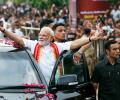
'Non-BJP state governments and their leaders, navigating today's political landscape, know well they have no clue what awaits around the corner.' 'The chances of charges pressed and oneself getting parked in custody play out on an uneven playing field,' points out Shyam G Menon.
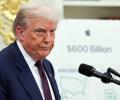
As one of the federal appeal courts in the United States ruled that most of tariffs imposed by Trump administration are not accordance with the laws, US President Donald Trump on Friday (local time) affirmed that all tariffs imposed on the countries will remain in effect, calling a recent ruling by a 'highly Partisan Appeals Court' incorrect.
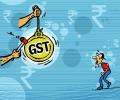
India needs Goods and Services Tax (GST) Council-like common platforms between states and the Centre in areas such as land clearances, power, and water to fast-track infrastructure projects to achieve double-digit growth going ahead, said Praveer Sinha, chief executive officer and managing director of The Tata Power Company.
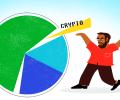
Investors should be mindful of the high volatility in cryptos: Bitcoin has fallen more than 80 per cent in past corrections.
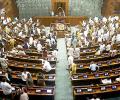
The Monsoon session of Parliament concluded after facing disruptions and protests over the revision of electoral rolls in Bihar. Despite the disruptions, the government managed to pass key legislations.

After the war erupted between Russia and Ukraine, the US and Western nations imposed sanctions on Moscow. However, India has continued to purchase Russian oil.

Last fortnight, State Bank of India Chairman C S Setty lifted the veil on a subject long spoken of in corporate corridors: Why can't our banks finance mergers and acquisitions (M&As)? Change is in the air: Indian Banks' Association (of which Setty is the chairman) is to "make a formal request" to Mint Road to make way for it. Thus far the exclusive turf of foreign banks even though its funding remains offshore - as in, it's not on these entities rupee-book (and a few select shadow banks) - a most lucrative segment in the investment banking suite, M&As, will be homeward-bound.
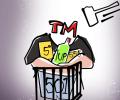
Delhi high court ruling on numbers as trademarks could be a trendsetter.

DPDP Act (2023) gives individuals the right to decide how their personal data is collected and used. For many businesses, this means reworking longstanding data practices, notes Ravi Duvvuru.

Rijiju also hit out at Congress leader Rahul Gandhi, saying that his own party MPs "get uncomfortable" when he speaks in Parliament and are apprehensive that he will do "anap-shanap baatein" and the party will have to bear the consequences.

The disqualification of wrestler Vinesh Phogat in the Olympics after being found overweight before the final bout also saw the government and Opposition come to blows in Parliament.

United States President Donald Trump on Tuesday (local time) reiterated his opposition to electric vehicle (EV) mandates, criticising government subsidies for Tesla CEO Elon Musk and questioning the broader push for EV adoption in the United States.
